
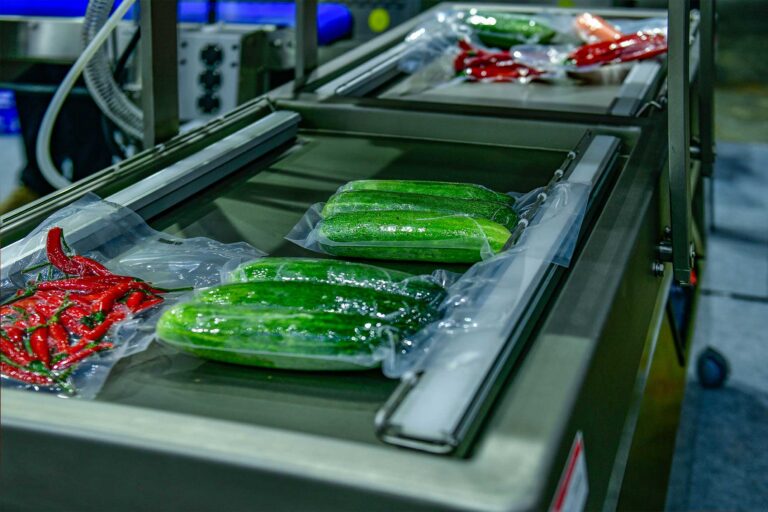
Food-safe packaging solutions play a critical role in protecting products while improving shelf life, production efficiency, product performance, and the overall customer experience. At Shorr, we combine deep technical expertise with a consultative approach to help food manufacturers identify opportunities to meet regulatory requirements, achieve sustainability goals, and adapt to evolving market trends.
Backed by decades of experience and proven performance data, our team of food packaging specialists delivers reliable, scalable solutions that balance safety, quality, and efficiency.
What Is Food-Safe Packaging?
Food-safe packaging refers to primary packaging made from materials approved by the U.S. Food and Drug Administration (FDA) for direct food contact. These materials are engineered to deliver critical barrier properties that protect products from oxygen, moisture, aroma migration, and grease, and to maintain mechanical integrity throughout processing, handling, and distribution. In short, primary packaging helps prevent contamination and extend shelf life.
Compliance with food-safe packaging standards is overseen by regulatory organizations such as the FDA and the European Food Safety Authority (EFSA). To achieve global food safety certifications, such as SQF, BRC, or FSSC 22000, manufacturers must have a rigorous, documented Food Safety Management System in place, including traceability, formalized policies and procedures, and internal and independent audits.
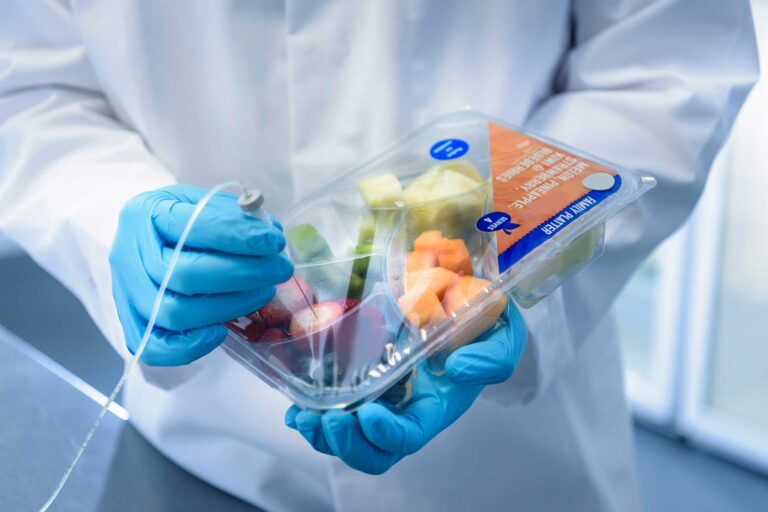
At Shorr, our packaging experts partner with you to design and implement food-safe packaging solutions tailored to your operation. Whether your priorities include shelf life extension, cost optimization, or sustainability, we help ensure your packaging helps advance your goals, compliance efforts, and performance.
Well-Established Food-Safe Packaging Solutions
Standard food-safe packaging solutions form the foundation of many food manufacturing operations. Manufacturers rely on these solutions for their barrier performance, material availability, and ease of validation in regulated production environments.
Solutions like perforated produce films help maintain product integrity and presentation by supporting proper respiration and freshness throughout the supply chain.
Established food-safe packaging formats are commonly used across food segments, including:
- Produce
- Dairy
- Fresh and processed meats/proteins
- Bakery/confectionery
For many applications, standard packaging solutions provide product protection, regulatory compliance, and operational efficiency without adding unnecessary complexity to the packaging process.
Advanced Food-Safe Packaging Solutions
When products require enhanced protection, manufacturers turn to advanced food‑safe packaging solutions designed to deliver higher barrier performance and extended shelf life. Shorr leverages proven high‑barrier technologies to help protect products from oxygen and moisture intrusion while maintaining food safety and quality. Examples include matching trays with lidding films for high-barrier food applications to extend shelf life and using high‑barrier forming and non‑forming films to keep fresh meats and poultry safe for consumption.
Consumer demand for minimal processing continues to impact packaging decisions in the food industry, as brands increasingly require packaging that supports longer shelf life without relying on added chemicals or preservatives, allowing the food to remain clean and meet distribution requirements.
Modified Atmosphere Packaging (MAP) and High-Pressure Processing (HPP) fall into this category as well and are used extensively across a range of applications. MAP, which changes the gas composition inside the package, has been relied on for over 20 years in the fresh-cut produce category to extend shelf life and quality.¹ HPP is widely used to preserve refrigerated and high-moisture products like guacamole and salsa.
Sustainability is another key component of effective packaging solutions. Manufacturers and retailers are successfully implementing packaging solutions that meet How2Recycle (H2R) guidelines and align with the robust sustainability initiatives of major retailers, including Walmart, Costco, and ALDI. Brands may be able to reduce overall plastic usage by transitioning to thinner, lower-gauge film with recycled content. These films maintain necessary food-safe barrier properties while incorporating renewable materials and lowering carbon footprint without compromising performance.
How Proven Packaging Innovation Is Redefining Growth in Emerging Food Markets
Over the past few years, significant advances have been made in food-safe packaging, driven by emerging technologies. Some of these new packaging solutions are supporting corporate sustainability commitments, as we’ve seen with Kraft Heinz. The company is planning to switch its PET ketchup bottle to a paperboard bottle as part of a concerted effort to make all packaging recyclable, reusable, or compostable.²
Other brands are switching to post-consumer recycled (PCR) packaging to meet California’s minimum PCR requirements.³ These initiatives are spearheaded by brands like ALDI, which made a commitment to include an average of 20% PCR in all of its plastic packaging, reduce all packaging materials by 15%, and ensure all packaging is either reusable, recyclable, or compostable.4 These types of initiatives are important drivers when it comes to diverting plastics from landfills, advancing environmental efforts, and strengthening consumer messaging.
One category that has benefited from these elevated packaging solutions is the ready-to-eat meal market, which is expected to be valued at $203.16 billion in 2026 and $326.50 billion by 2034.5 Leveraging this technology, Shorr partnered with a home meal delivery brand to develop a film for food trays that keeps food fresh and safe for up to seven days through shipment and delivery. The extended shelf life of the product has helped the company stay competitive in a crowded meal delivery space that relies on repeat purchases.
Regulations Driving Change in Food Packaging
Major drivers of packaging innovation across the food industry are legislative and regulatory changes. Shorr’s team of packaging experts can provide helpful guidance to our customers on how to maintain compliance.
Below are a few highlights of the most recent regulatory and legislative updates impacting food packaging today.
Recyclability & Extended Producer Responsibility (EPR) laws have been adopted by several U.S. states and make the producer responsible for the end-of-life management of both the packaging and products they sell. Fees are assigned by material type, with funds being used to improve waste management programs, enhance educational programs, and increase recycling and diversion rates. Non-compliance can be costly. This legislation is driving producers toward mono-materials, which may cost more upfront but will likely have less exposure to EPR fees, a reduced environmental footprint, and a stronger sustainable marketing story.
California, along with several other states, has implemented further packaging regulations by instituting bans on EPS (Styrofoam). While the ban does not prohibit EPS in foam meat trays, egg cartons, or coolers, it has significant impacts on food service applications and could lead to broader regulations down the road.
Additionally, California recently passed Senate Bill 343 (SB 343), which regulates how packaging can be labeled as “recyclable.” The “chasing arrows” symbol is widely recognized by consumers as a sign that an item is recyclable; however, it often appears on items such as plastic films or multi-layer packaging that are not acceptable in curbside recycling programs and instead are only accepted in store drop-off outlets. This can create confusion for consumers and may lead to contamination issues.
Another important topic for consumers is PFAS, or “forever chemicals”, which are chemicals that cannot degrade or break down. Several states have already passed laws banning the addition of PFAS to food packaging or requiring additional reporting on their use. Food brands selling into these states are having to rethink packaging to ensure compliance.
These examples demonstrate how quickly food packaging requirements are changing, emphasizing the importance of working with a packaging partner who provides guidance and solutions to help comply with continuously evolving regulations. There are a number of more sustainable packaging options available today that can help brands reduce their environmental impact ahead of the evolving regulatory landscape.
A Collaborative Approach to Food-Safe Packaging
Food-safe packaging is no longer a one-size-fits-all approach. From well-established materials to advanced and emerging technologies, food manufacturers have to balance regulatory compliance, product protection, shelf life performance, sustainability goals, and speed to market, all while navigating continuously evolving consumer and regulatory demands.
At Shorr, we take a holistic, comprehensive approach that begins with understanding your goals and ends with packaging solutions that are safe, effective, and designed to perform across your supply chain.
By combining our expertise in primary packaging, automation, sustainable solutions, and supply chain support, we deliver end-to-end solutions that help improve shelf life, efficiency, and customer experience.

Because we are a Safe Quality Food (SQF) certified partner, you can have confidence in your supply chain knowing that our operations meet current food safety and quality control standards.
To speak to one of our food packaging experts, reach out for a free consultation. Or click here to see how we’ve helped brands develop and automate packaging solutions.
If we could do any of this for your organization, wouldn’t that be worth a call? (888) 885-0055
¹ “Modified Atmosphere Packaging (MAP),” International Fresh Produce Association, https://www.freshproduce.com/resources/sustainability/modified-atmosphere-packaging/
² Connolly, Kate Bertrand, “Kraft Heinz to Test Paper Bottle for Ketchup,” Packaging Digest, June 7, 2022, https://www.packagingdigest.com/sustainability/kraft-heinz-to-test-paper-bottle-for-ketchup
³ “Plastic Minimum Content Standards and Reporting for Beverage Manufacturers,” accessed April 29, 2026, CalRecycle, https://calrecycle.ca.gov/bevcontainer/bevdistman/plasticcontent/
4 “Sustainable Packaging,” Aldi Corporate Sustainability, accessed April 29, 2026, https://corporate.aldi.us/corporate-sustainability/environment/sustainable-packaging
5 “Prepared Meals Market Size, Share & Industry Analysis, By Product (Frozen Meals, Chilled Meals, and Canned Meals), By Distribution Channel (Supermarkets & Hypermarkets, Convenience Stores, Online Retail, and Others), and Regional Forecast, 2026-2034,” Fortune Business Insights, https://www.fortunebusinessinsights.com/prepared-meals-market-105002